
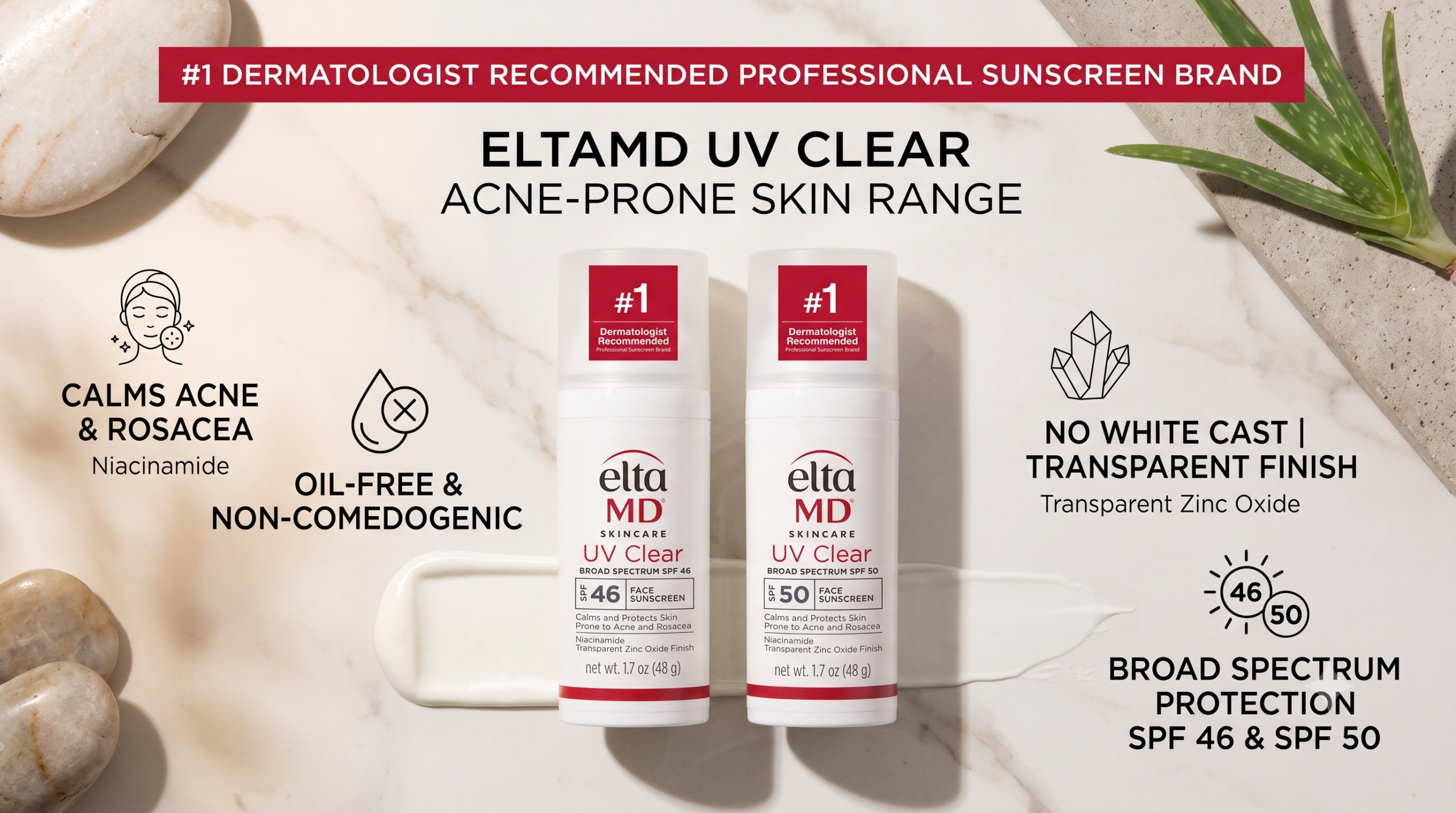
EltaMD UV Clear Sunscreen Review
Hello Beauties! Welcome back to the blog.
This post contains affiliate links. If you buy through them, we may earn a small commission at no extra cost to you.
Introduction: The Problem & The Promise
Let’s be honest: for a lot of us, wearing daily sunscreen feels like a chore. If you have acne-prone, oily, or sensitive skin, slapping a thick, greasy lotion onto your face feels like you’re just asking for a breakout. We all know we need sun protection to prevent aging and skin cancer, but finding one that doesn’t leave you looking like a shiny ghost—or worse, covered in cystic acne—is a massive struggle.
Enter the EltaMD UV Clear Face Sunscreen (SPF 46). If you’ve ever complained to a dermatologist about sunscreen breaking you out, chances are they handed you a sample of this exact product. The promise? A lightweight, oil-free sunscreen that actually calms inflammation, protects against UVA/UVB rays, and leaves zero white cast. But does it actually live up to the hype (and the premium price tag)? Let’s break it down.
Quick Verdict (The TL;DR)
Yes, it earns the hype. EltaMD UV Clear combines 9% zinc oxide with a chemical UV filter for genuinely strong broad-spectrum protection, and backs it up with 5% niacinamide, hyaluronic acid, and lactic acid — ingredients that do double duty calming redness and supporting hydration rather than just sitting there as SPF filler. It’s lightweight, layers well under makeup, and has a long track record with acne-prone and rosacea-prone users. The main downsides are the price relative to drugstore options and the presence of a chemical filter that some clean-beauty-focused shoppers prefer to avoid. For most people dealing with sensitive, breakout-prone, or redness-prone skin, it’s one of the safer bets in the SPF aisle.
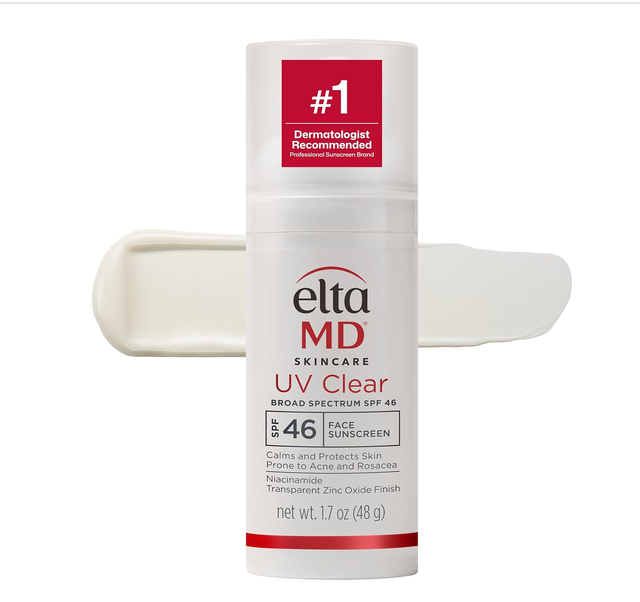
Who Is the EltaMD UV Clear Sunscreen Actually For?
This sunscreen is a strong match for:
- Acne-prone and breakout-prone skin — it’s formulated to be non-comedogenic and is a long-standing dermatologist recommendation for this exact concern
- Rosacea-prone and easily-flushed skin — the niacinamide content is specifically included to help calm redness and inflammation
- People who’ve struggled with white cast — the zinc oxide is micronized and blended with a chemical filter to minimize the chalky finish common with mineral-only sunscreens
- Anyone who wants SPF plus a bit of skincare benefit — the niacinamide, hyaluronic acid, and vitamin E give it more of a “day cream with SPF” feel than a bare-bones sunscreen
It’s a less natural fit for:
- Strict mineral-sunscreen-only shoppers — this formula pairs zinc oxide with a chemical filter (octinoxate), so it’s not a pure physical sunscreen
- Budget-conscious buyers — it’s priced well above most drugstore SPF options
- Deeper skin tones concerned about the untinted version — some users note a very faint cast on deeper complexions. EltaMD does offer tinted versions specifically to address this
Key Ingredients & Real-World Benefits
Zinc Oxide (9%). As the primary physical/mineral filter, this ingredient does the heavy lifting for broad-spectrum protection. Zinc oxide reflects and scatters UVA and UVB rays, and skincare experts widely regard it as gentle enough for sensitive and reactive skin. Brands even use it in products for skin irritation like diaper rash, which highlights how well skin typically tolerates it.
Chemical UV filter. Paired with the zinc oxide, this filter boosts overall SPF performance and helps offset the heavier. Chalkier feel that a zinc-only formula would otherwise have. It’s part of why this sunscreen applies so much more smoothly than many mineral-only alternatives.
Niacinamide (5%). This is a standout inclusion for a sunscreen. Niacinamide has anti-inflammatory properties that help reduce redness and support an even-looking tone. Which is a big part of why this product is so often recommended for rosacea and acne-prone skin specifically. It’s working on skin calmness while the SPF handles protection.
Sodium Hyaluronate (Hyaluronic Acid). A humectant that draws in and holds onto moisture, helping offset the drying effect some sunscreens have, especially with daily use over time.
Lactic Acid. Included in a small, non-exfoliating capacity here, more as a buffering and skin-conditioning ingredient than an active exfoliant at this concentration.
Tocopheryl Acetate (Vitamin E). An antioxidant included to help support the skin against everyday environmental stress, layered on top of the sun protection itself.
How to use it:
- Apply as the last step of your morning skincare routine, after moisturizer and before makeup
- Use roughly a nickel-sized amount (about ¼ teaspoon) for full face coverage — most people apply less than this, which is a major reason sunscreens underperform their labeled SPF in real-world use
- Reapply every two hours if you’re outdoors for extended periods, or after sweating or swimming
- It can be worn alone on no-makeup days or layered under foundation and concealer without pilling
Hands-On Performance: Does It Deliver?
The genuinely lightweight texture feels closer to a silky lotion than a traditional sunscreen. It absorbs within a minute or two, completely avoiding the greasy, tacky finish common in higher-SPF products. On fair to medium skin tones, it leaves no noticeable white cast—typically the biggest complaint consumers have about zinc-based formulas.
During several weeks of daily wear, the formula layered perfectly with other skincare actives and never pilled or balled up under foundation. The niacin amide also delivers noticeable calming benefits over time. Skin prone to flushing or reddening looks visibly calmer with consistent use, perfectly aligning with why dermatologists frequently recommend the ingredient to treat rosacea and acne.
The one place it’s worth tempering expectations: this is still a sunscreen first. It’s not going to treat active acne or dramatically fade discoloration on its own. What it does well is avoid making those conditions worse, which — given how many sunscreens do the opposite — is actually the differentiator here.
The Pros and Cons: EltaMD UV Clear Sunscreen
Pros:
- Genuinely broad-spectrum protection with minimal white cast
- Niacinamide inclusion actively helps calm redness rather than just providing SPF
- Lightweight, fast-absorbing texture that layers well under makeup
- Long-standing dermatologist recommendation for acne-prone and rosacea-prone skin
- Non-comedogenic and generally well tolerated even by reactive skin types
- Available in tinted and untinted versions, and multiple sizes
Cons:
- Premium price compared to drugstore SPF options
- Contains a chemical UV filter, which some shoppers specifically want to avoid
- Untinted version can leave a very faint cast on deeper skin tones — tinted version is the better match there
- Not a treatment product — it protects and calms, but won’t clear active breakouts or significantly fade dark spots on its own
- Smaller bottle sizes mean frequent repurchasing with daily, full-face application
EltaMD UV Clear vs. The Competition
Vs. La Roche-Posay Anthelios: Anthelios sunscreens tend to lean more purely chemical-filter-based and are formulated more for general daily wear across skin types, without the specific acne/rosacea-calming angle. EltaMD’s niacinamide inclusion gives it an edge for anyone whose main concern is redness or breakouts alongside sun protection.
Vs. Supergoop Unseen Sunscreen: Supergoop’s Unseen is prized for its invisible, primer-like finish and is popular for makeup wear, but it doesn’t include the same calming, skin-barrier-focused ingredient set. EltaMD is the better pick specifically for reactive or blemish-prone skin; Supergoop wins on pure makeup-primer feel.
Vs. drugstore mineral sunscreens (e.g., Neutrogena Sheer Zinc): Budget mineral options can offer solid protection at a much lower price, but they’re far more likely to leave a visible white cast and lack the added niacinamide, hyaluronic acid, and vitamin E blend. EltaMD is paying for that gentler, more finished formula — the drugstore route is fine if you’re budget-constrained and don’t have reactive skin.
Is It Worth the Price?
Sunscreen is one of the few skincare products backed by strong, near-universal consensus on its importance, so the real question isn’t whether to use one — it’s whether this specific formula justifies its cost over cheaper alternatives.
For people with acne-prone, rosacea-prone, or generally reactive skin, the answer leans yes. The niacinamide and calming ingredient profile solve a real problem — sunscreens that irritate or trigger breakouts — that cheaper options don’t always address. For skin that isn’t particularly reactive and just needs reliable daily SPF, a well-reviewed drugstore sunscreen can do the job for a fraction of the price, and the premium here is less clearly justified.
Frequently Asked Questions (FAQs)
Is EltaMD UV Clear good for oily or acne-prone skin?
Yes — EltaMD formulates it without oils or pore-clogging ingredients, and dermatologists consistently recommend it for acne-prone skin.
Does it leave a white cast?
Most users report minimal to no white cast on fair-to-medium skin tones because the formula pairs zinc oxide with a chemical filter. Deeper skin tones may notice a faint cast with the untinted version, but EltaMD created tinted formulas specifically to address this.
Can I wear it under makeup?
Yes — it layers seamlessly under makeup without pilling, so many people use it as their final skincare step before applying foundation or concealer.
Is it reef-safe?
Because it contains a chemical UV filter alongside zinc oxide, it isn’t a pure mineral, reef-safe-certified formula in the way that some titanium dioxide/zinc-only sunscreens are. If reef safety is a priority, check current ingredient labeling or consider a mineral-only alternative.
How much should I apply?
About a nickel-sized amount, or roughly ¼ teaspoon, for full face coverage — most people apply noticeably less than this, which reduces real-world SPF effectiveness.
Does it help with redness or rosacea?
The 5% niacinamide content is specifically included to help calm inflammation and reduce the appearance of redness, which is part of why it’s frequently recommended for rosacea-prone skin.
Final Verdict: EltaMD UV Clear Sunscreen Review
EltaMD UV Clear earns its dermatologist-favorite reputation by solving the actual problem sensitive and acne-prone users have with sunscreen: irritation, white cast, and heaviness. The combination of solid broad-spectrum protection with niacinamide, hyaluronic acid, and vitamin E makes it feel less like a chore and more like a genuine skincare step. It’s not the cheapest option on the shelf, and it’s not a pure mineral formula if that’s a hard requirement for you, but for reactive, breakout-prone, or redness-prone skin, it’s a well-earned recommendation.
EltaMD UV Clear Sunscreen Review